
Why male mosquitoes are attracted to the sound of female wingbeats
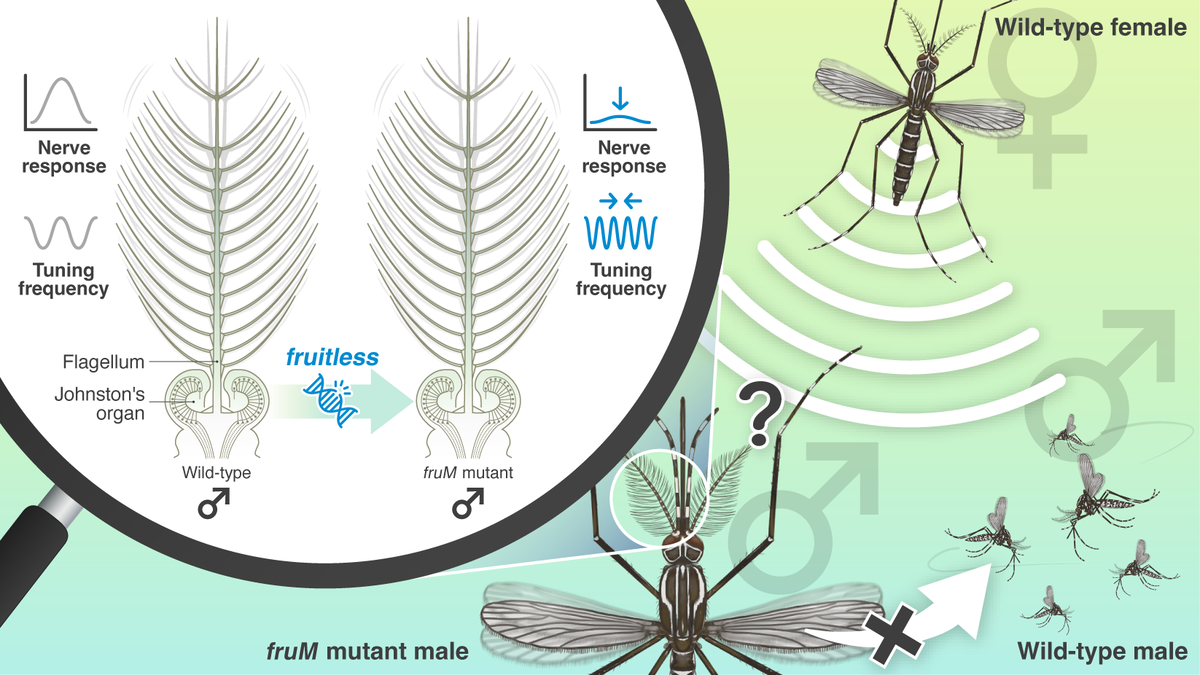
Scientists identify the gene responsible for male mosquito hearing behaviors
To prevent the spread of dangerous diseases by mosquitoes, scientists have long studied their reproductive mechanisms to control their population sizes. Now, researchers have discovered that the 'fruitless' gene in mosquitoes is responsible for the male's ability to locate and mate with females by listening for their wingbeat sound. Mutating this gene in males of the yellow fever mosquito, Aedes aegypti, makes them incapable of locating female mosquitoes. The research team was led by Postdoctoral Researcher Yumin Loh, Assistant Professor Matthew Su, and Professor Azusa Kamikouchi of the Institute of Transformative Bio-Molecules (WPI-ITbM) at Nagoya University in Japan, in collaboration with Professor Daniel Eberl of the University of Iowa in USA. Their research was published in the peer-reviewed journal PLOS Biology on October 27th, 2026.
Mosquitoes and their reproduction mechanism
The yellow fever mosquito, Aedes aegypti, is a vector of diseases including dengue fever, Zika fever, and yellow fever. At dusk, males gather to form swarms, where they detect the wingbeat sounds of females flying into the swarm, pursue them, and mate with them. After mating, females search for a host, take blood, and lay eggs. Hearing is an essential sensory modality for males to mate and elucidating the mechanisms underlying hearing is expected to lead to new strategies for controlling mosquito reproduction.
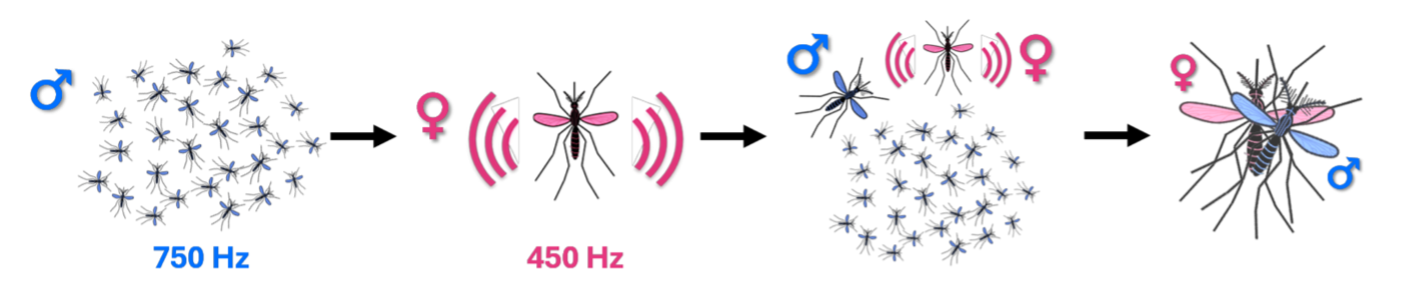
Male mosquitoes form swarms and wait for females to arrive. When a female approaches, males detect her wingbeat sounds, approach and court her, then ultimately mate with her. Wingbeat frequencies differ between males and females: approximately 750 Hz in male Aedes aegypti and 450 Hz in females. Photo Credit: modified from Loh et al., 2026.
In insects, one of the genes that generates sex differences in neural function is fruitless. Previous studies using Drosophila (i.e. fruit flies) have revealed that fruitless is primarily responsible for generating sex differences in behavior. In this study, the research team elucidated the influence of fruitless on the behavior of male mosquitoes and their hearing systems.
The mosquito's "ear"
A mosquito's "ears" are auditory organs that detect sound. The ear consists of the Johnston's organ located at the base of the antenna and the long flagellum extending from it. Mosquito ears are highly sexually dimorphic, and there are substantial differences in the frequencies of sound to which male and female ears are tuned to.
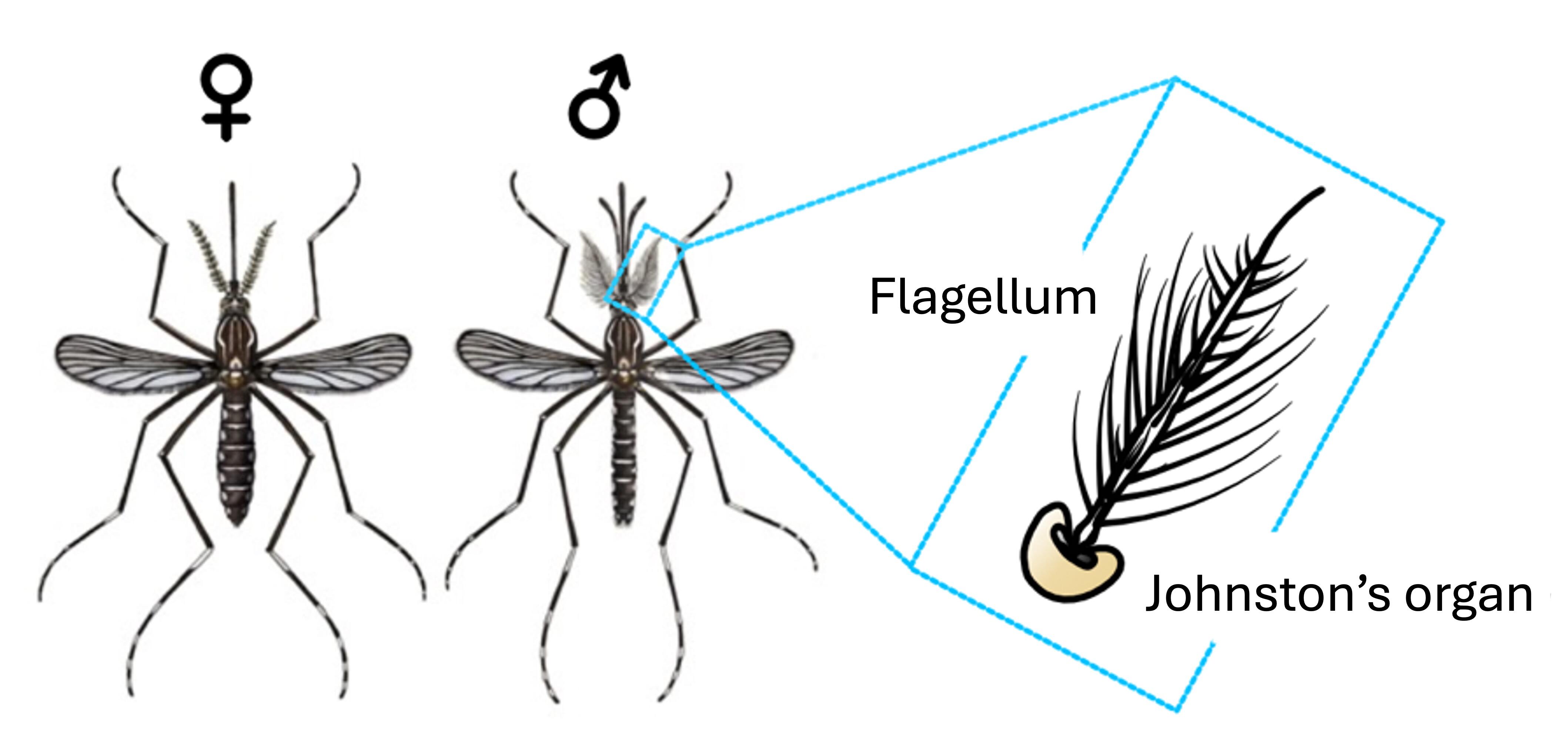
Like our eardrum, the flagellum receives sound and vibrates. These vibrations are transmitted to the Johnston's organ at the base of the antenna, activating the neurons within it. Photo Credit: WPI-ITbM.
Behavioral effects of mutating the fruitless gene
In this study, the research team discovered that fruitless mutant males, unlike normal males, do not gather with other males at dusk and instead exhibit female-like behavior. Additionally, while normal males displayed strong attraction to frequencies matching female wingbeat sounds, mutant males were not attracted to any of the frequencies tested.
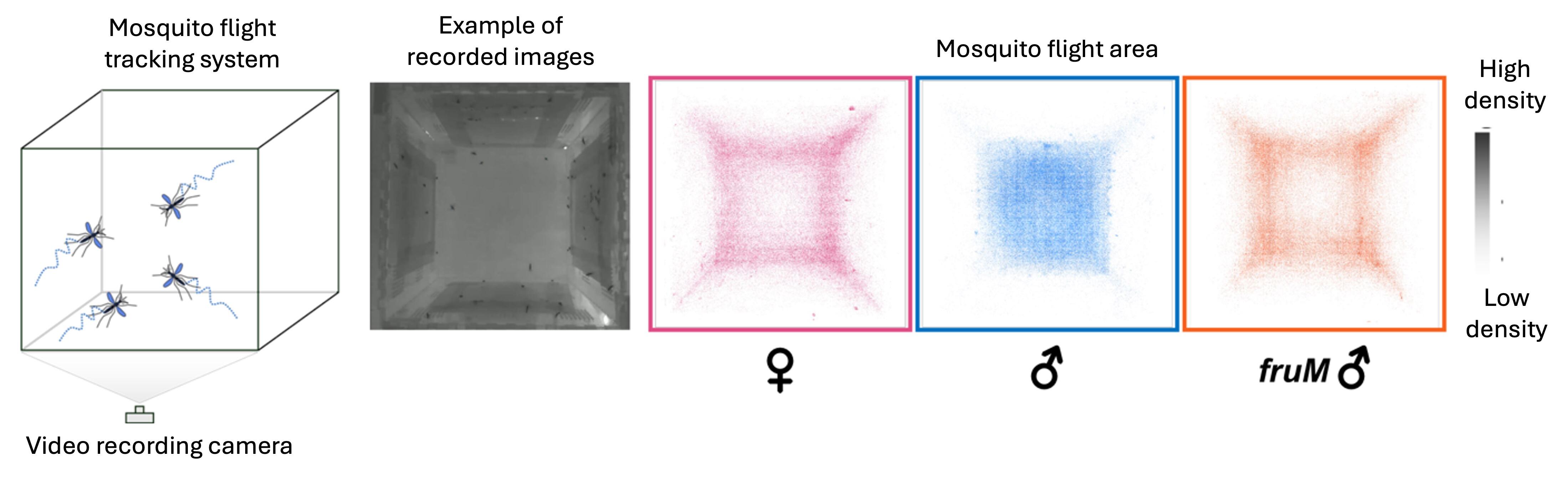 Mosquito flight was recorded from beneath a rearing cage, and the flight trajectories were visualized as heat maps. Points represent pixel occupancy. Males (♂) gathered near the center of the cage, whereas females (♀) and mutant males (fruM♂) were distributed more toward the periphery. Photo Credit: modified from Loh et al., 2026.
Influence of fruitless on male hearing
In the ear, the research team confirmed strong expression of fruitless in the Johnston's organ, suggesting the gene is involved in ear function. Upon further examination of ear performance, mutant males featured several distinctions from normal males. Normal males vibrate their ears for peak sensitivity towards female wingbeat sounds. However, mutant male peak sensitivity was shifted higher, outside the frequency range of female wingbeat sounds. Furthermore, sound detection of mutant males was severely impaired, with auditory neuron response to sounds being one-sixth of that in normal males.
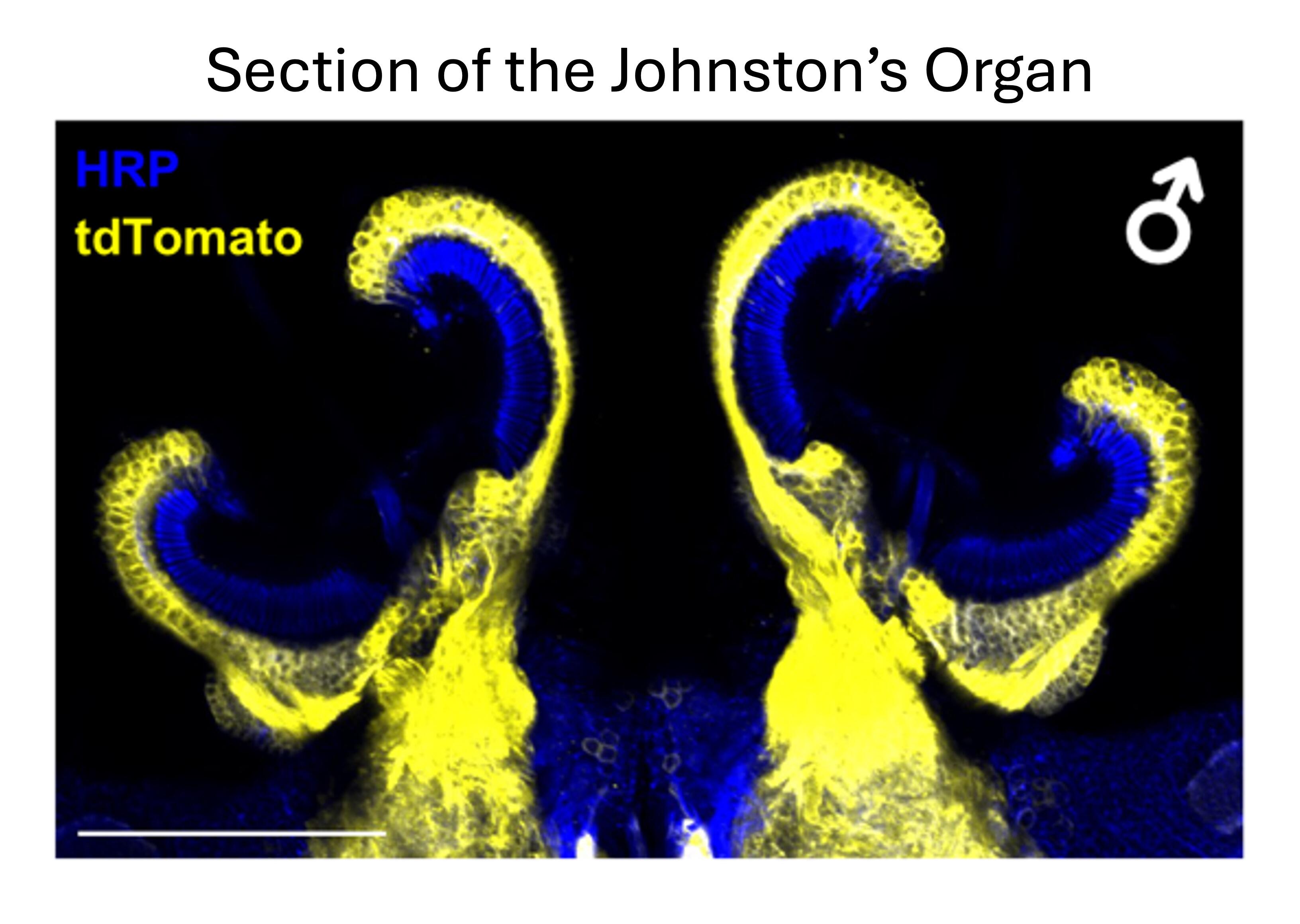
Expression of the fruitless gene was visualized using a tdTomato marker (yellow). Blue indicates the distribution of neurons visualized using an anti-HRP antibody. Photo Credit: modified from Loh et al., 2026.
Influence of fruitless on ear anatomy
Across all insects, only mosquito ears contain auditory efferent neurons, which project from the central nervous system to the ear and modulate hearing function. Interestingly, close examination of the internal anatomy of Johnston's organ revealed that mutant males had an altered auditory efferent network compared to control males. Mutating the fruitless gene partially feminizes males and impairs them from being able to amplify sounds.
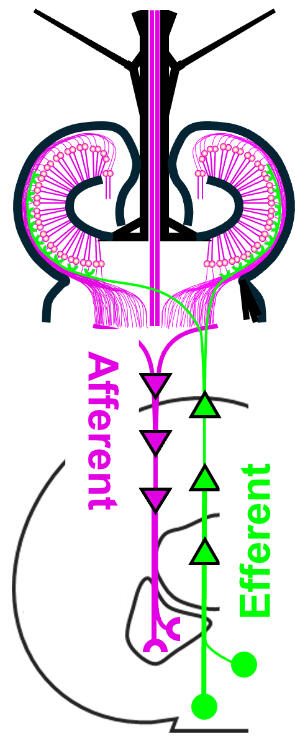
Visualization of the afferent and efferent neuron networks in mosquitoes. Photo Credit: modified from Loh et al., 2026.
Influence of fruitless on female and male gene expression
Fruitless is assumed to directly suppress female-type genes while indirectly enhancing male gene expression. By analysing RNA sequencing datasets from mosquito ears, the research team identified changes in the expression of genes that encode dyneins, large molecular motor proteins previously linked to differences in hearing function between the sexes. The types of dynein highly expressed differred between mutant and wild-type males, which may contribute to hearing amplification function impairment in mutant males. The accumulation effect of changes in expression of multiple dyneins is assumed to establish the male-specific ear that enables males to detect female wingbeat sounds.
Significance of their results
This research revealed that fruitless is responsible for establishing male auditory function and the findings may have applications for mosquito control. Because males must hear female wingbeat sounds for mating to occur, targeting fruitless and its downstream genes may make it possible to interfere with the earliest stages of reproduction.
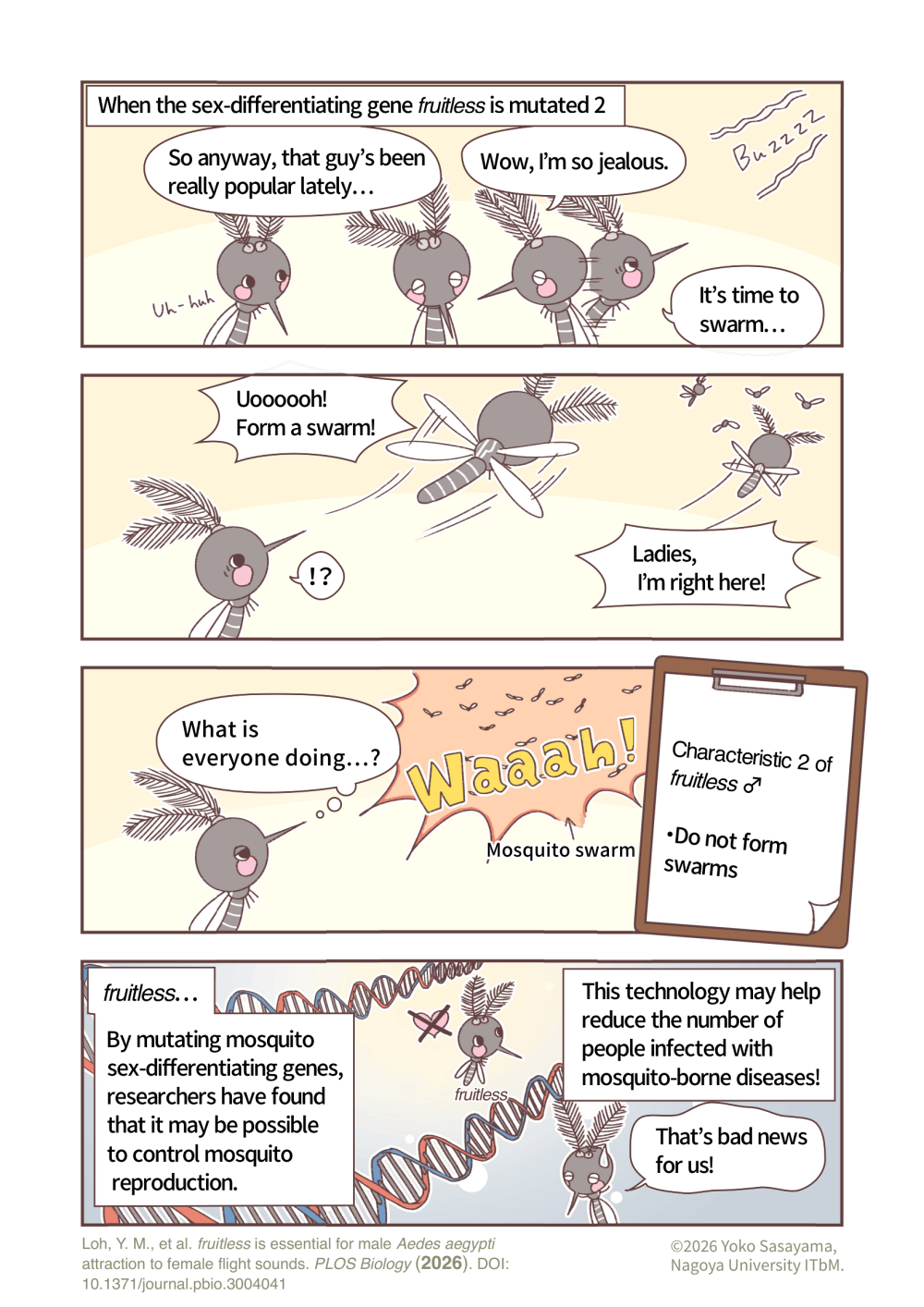
A special issue manga for this research can be viewed on the here!
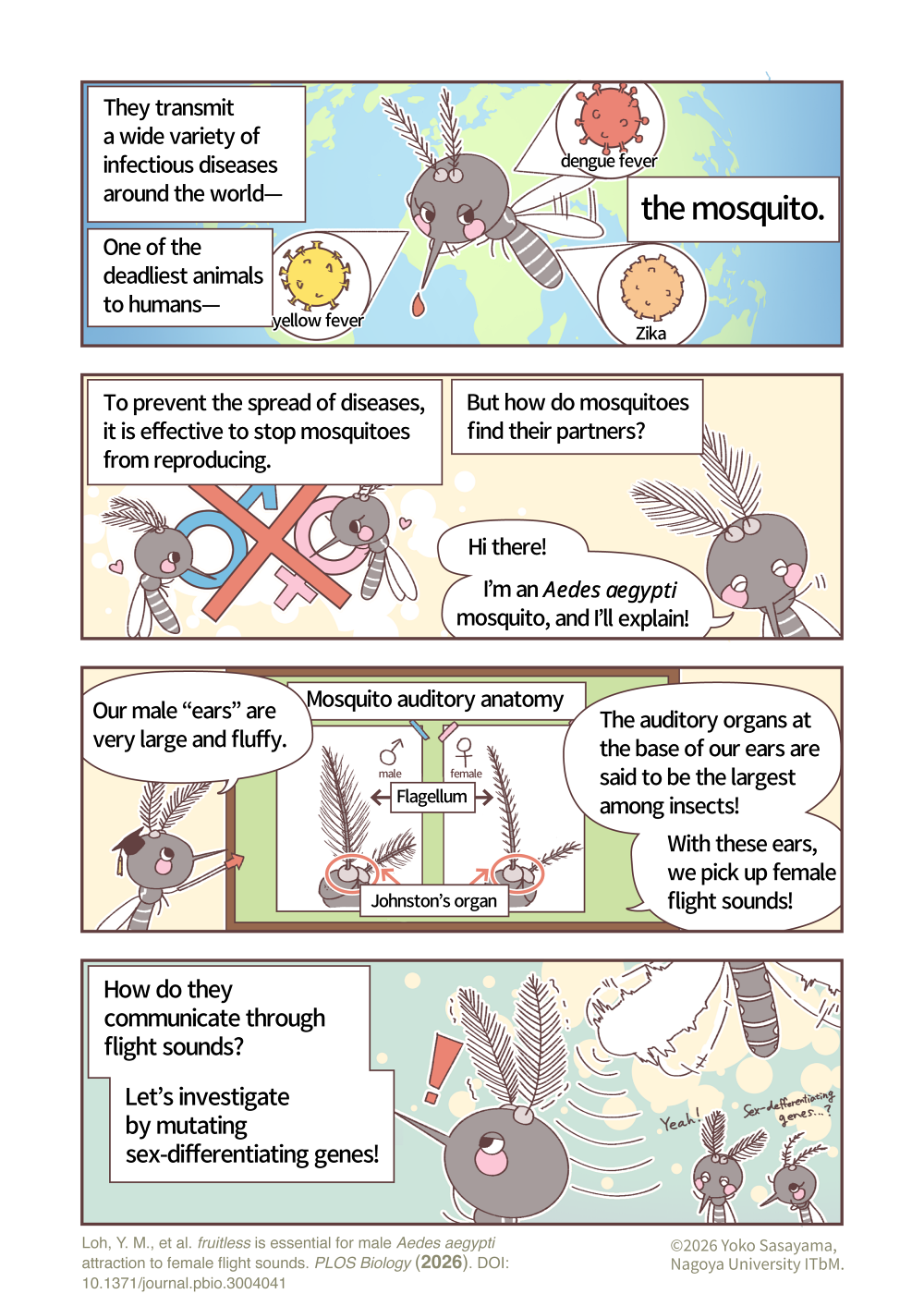
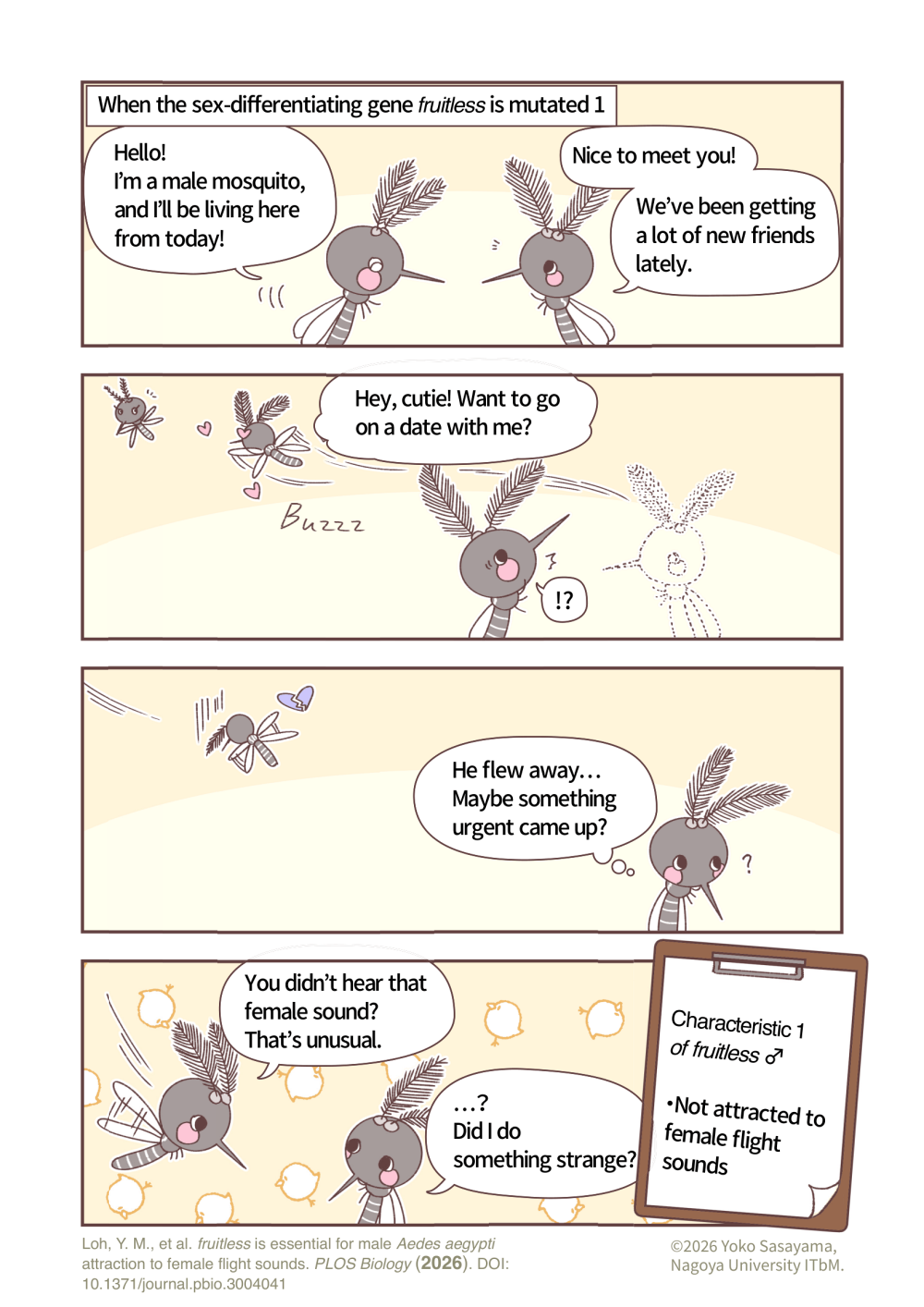
Other language versions are available here:
- Japanese
Information
| Title | fruitless is essential for male Aedes aegypti mosquito attraction to female flight sounds |
|---|---|
| Author | YuMin M Loh, Alberto J Thornton, WenWei Loh, Tai-Ting Lee, Wan-Tze Chen, Yifeng Y.J. Xu, Jia Xin Yap, Yuichiro Tsuchiya, Daniel F Eberl, Matthew P Su, Azusa Kamikouchi |
| Journal | PLOS Biology |
| DOI | 10.1371/journal.pbio.3004041 |
| Date | 2026.10 |